
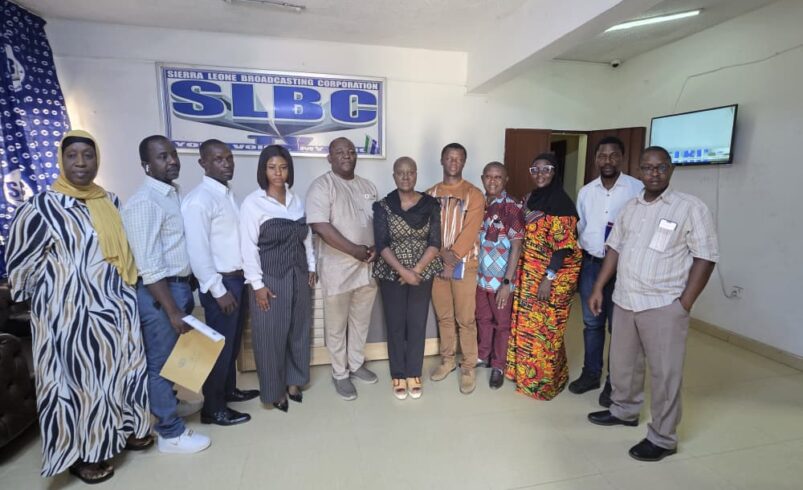
The Tripartite Steering Committee Secretariat has held a consultative meeting with the Sierra Leone Broadcasting Corporation (SLBC) as part of ongoing efforts to monitor progress on the implementation of Recommendation 77 of the Tripartite Committee reforms.
The engagement took place on Wednesday 11 March 2026 at the SLBC Conference Room and brought together representatives from both institutions to review the current implementation status and discuss the next steps toward completing the recommendation.
The meeting was chaired by the Director-General of SLBC, Madam Josephine Kamara, who welcomed participants and reaffirmed the corporation’s commitment to advancing institutional reforms and strengthening public broadcasting in Sierra Leone.
Providing an overview of the engagement, the Coordinator of the Tripartite Steering Committee Secretariat, Mr. Thomas Ngolo Katta, outlined the objectives of the meeting. These included obtaining the institution’s assessment of the Constitution of Sierra Leone (Amendment) Bill 2025, reviewing the implementation status of the Management and Functional Review (MFR) Report, examining policy and regulatory reforms, and receiving updates on SLBC’s ongoing collaboration with Media Reform Coordinating Group (MRCG). Discussions also focused on the current progress made in implementing Recommendation 77 and the projected timelines for its completion.
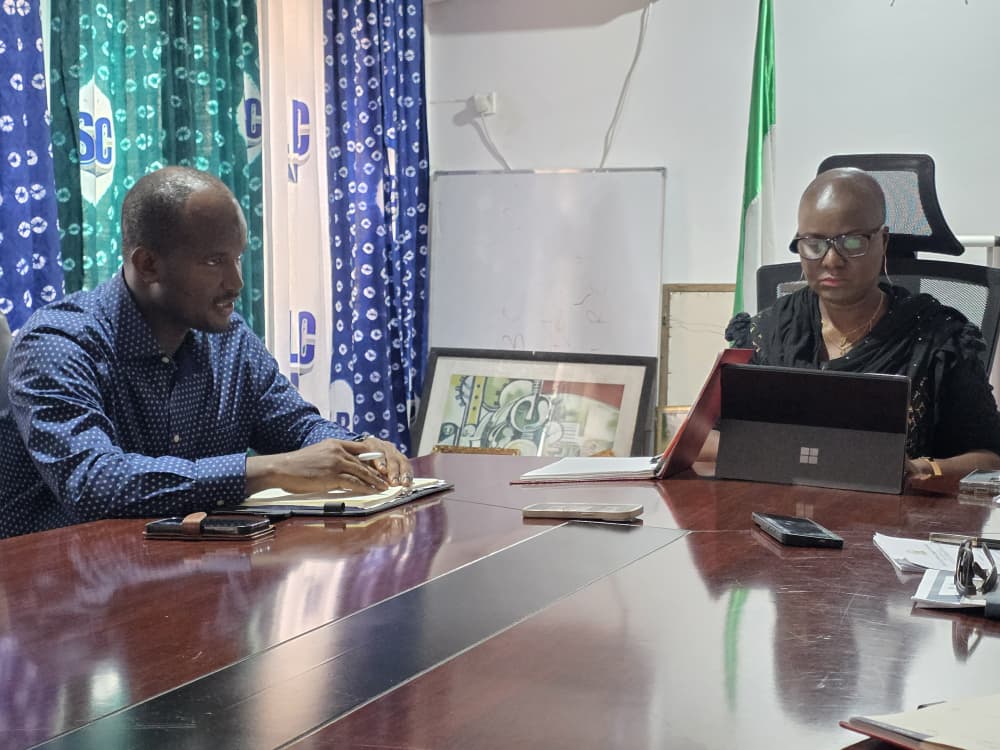
During the meeting, SLBC Director-General Josephine Kamara provided an update on reforms at the national broadcaster. She said the corporation had made progress on internal reforms, including plans to review its administrative structure through a joint process involving the Ministry of Information and Civic Education (MoIC) and the Human Resource Management Office (HRMO).
She also disclosed that work is underway to develop a framework for fair airtime allocation during election periods, aimed at ensuring equitable access for political parties in line with the requirements of Recommendation 77.
Madam Kamara further highlighted that SLBC management, the board, and the Public Sector Reform Unit (PSRU) have initiated key reform measures, including the Management and Functional Review of the Corporation. She added that SLBC has recently rebuilt its main studios and is exploring new partnerships with development agencies to improve broadcasting equipment and strengthen operational capacity.
The Deputy Director-General of SLBC, Mr. Asmiru Bah, delivered a detailed presentation on the findings of the Management and Functional Review. He emphasized the need for greater collaboration among stakeholders to strengthen the institution and ensure that SLBC effectively fulfils its mandate as the country’s national public broadcaster.
Mr. Bah stressed that institutional reforms should go beyond election-related responsibilities and instead support the broader goal of strengthening democratic governance and public information systems. He called on government institutions and development partners to support SLBC in developing modern broadcasting infrastructure capable of delivering credible and reliable public service broadcasting.
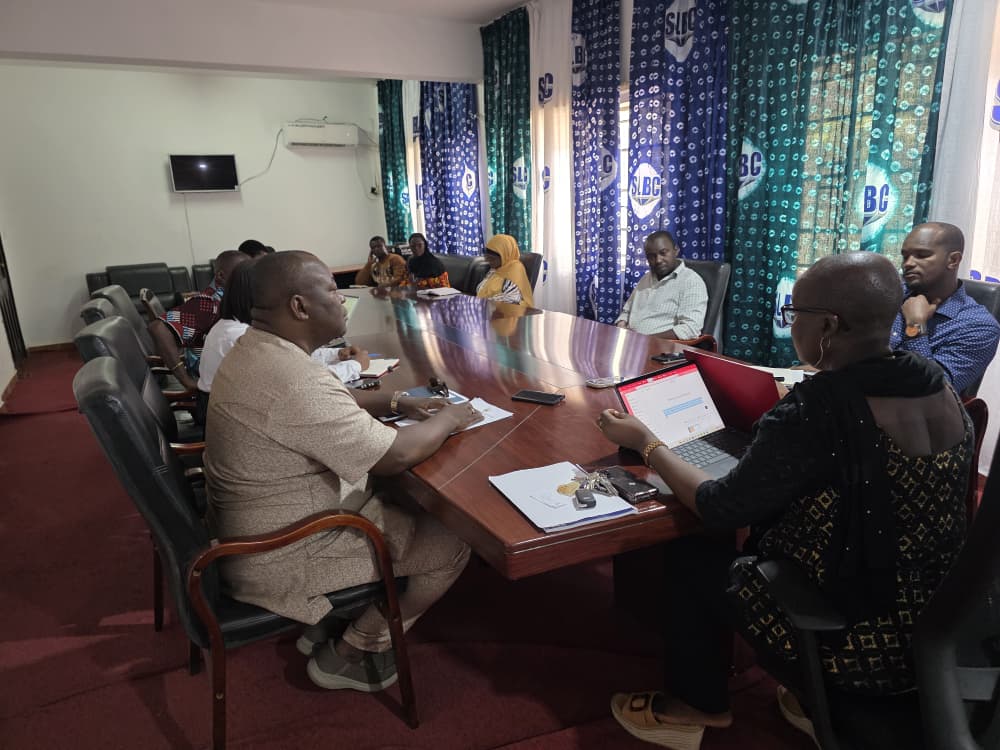
However, SLBC officials also highlighted a number of operational challenges affecting the institution, including limited financial resources, outdated technical equipment, and constraints in digital broadcasting capacity. Staff members noted that despite the presence of skilled personnel within the corporation, inadequate logistical and financial support continues to limit the institution’s growth and operational effectiveness.
Madam Kamara also pointed to concerns relating to staff motivation, salary structures, and institutional coordination, which she said have affected the pace of reform implementation. She added that although the Management and Functional Review has been finalized and plans are underway to implement Recommendation 77, SLBC was not fully included in a recent review process conducted by BBC Media Action with support from the European Union through International IDEA, which she described as important to the institution’s reform mandate.
Speaking during the meeting, Mr. Christopher A. Teh, Public Sector Expert at the Tripartite Secretariat, underscored the importance of strengthening SLBC’s administrative independence and financial sustainability, noting that these factors are essential for a credible and effective national broadcasting system.
In her closing remarks, Madam Kamara thanked the Tripartite Secretariat and other participants for what she described as a constructive engagement, expressing optimism that continued collaboration between the institutions would help strengthen public broadcasting and advance the country’s reform agenda.
In his closing remarks, Mr. Thomas Ngolo Katta called for stronger collaboration and evidence-based reporting to ensure transparency, credibility and public trust in the implementation of the national reform programme.


