
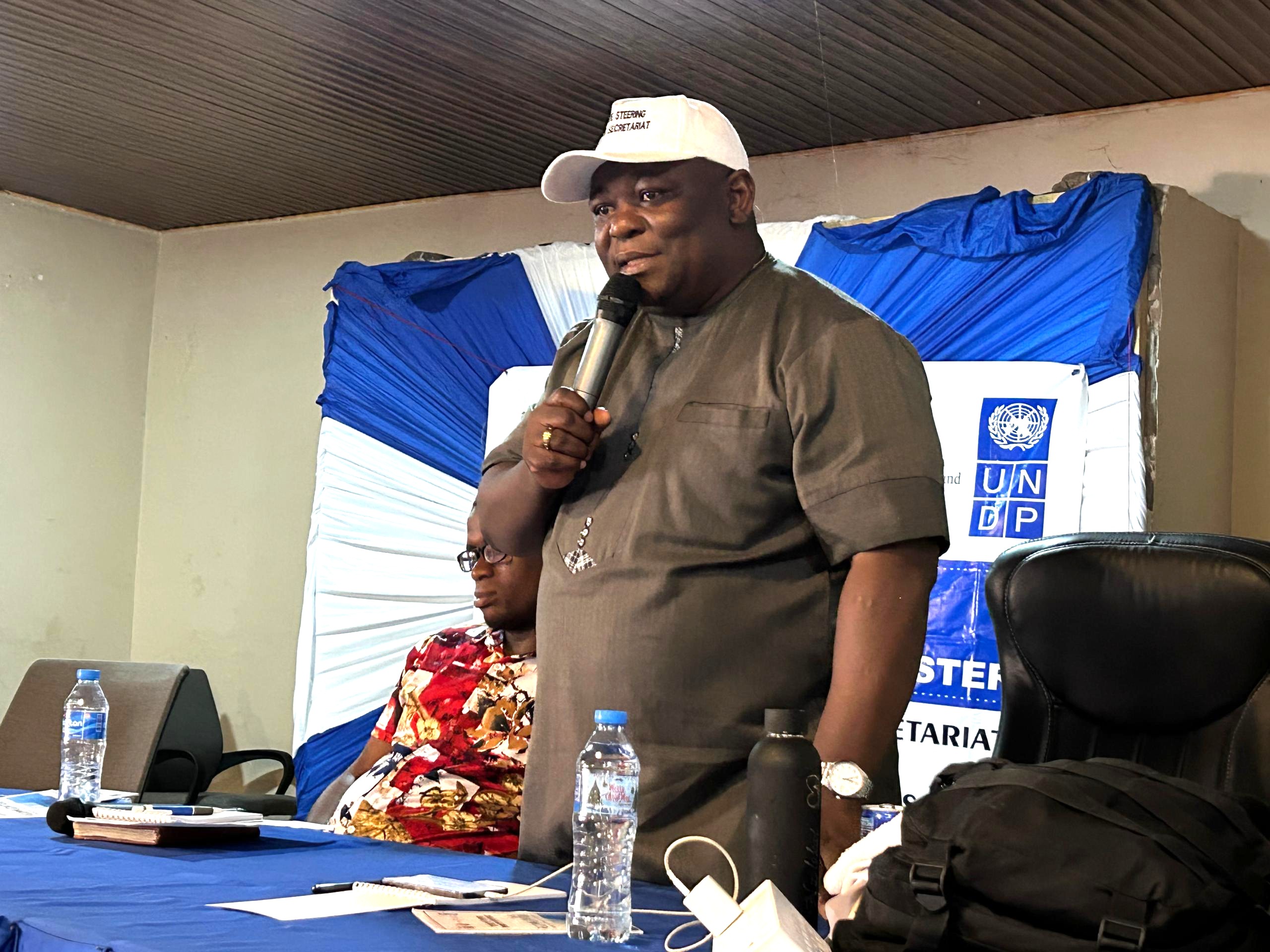
The Tripartite Steering Committee Secretariat (TSCS) has continued its nationwide civic education drive with engagements in the Western Urban and Western Rural Area to popularize the 80 Tripartite Recommendations.
“The public needs to know the content of the tripartite report. They need to understand what the recommendations say and the implementations around them. So, we are at the Western Urban and Rural Area to explain the recommendations, answer questions from the public, and empower them to counter fake information around the tripartite process,” Tripartite Coordinator said.
According to Ngolo Katta, the Tripartite Secretariat conducted two civic engagements held at the 50/50 hall at Tower Hill and at the Western Rural District Council hall respectively to popularize the 80 tripartite recommendations. They happened on Thursday 4th December, 2025. It marked the conclusion of the District-Level Public Education on the 80 Tripartite Recommendations.
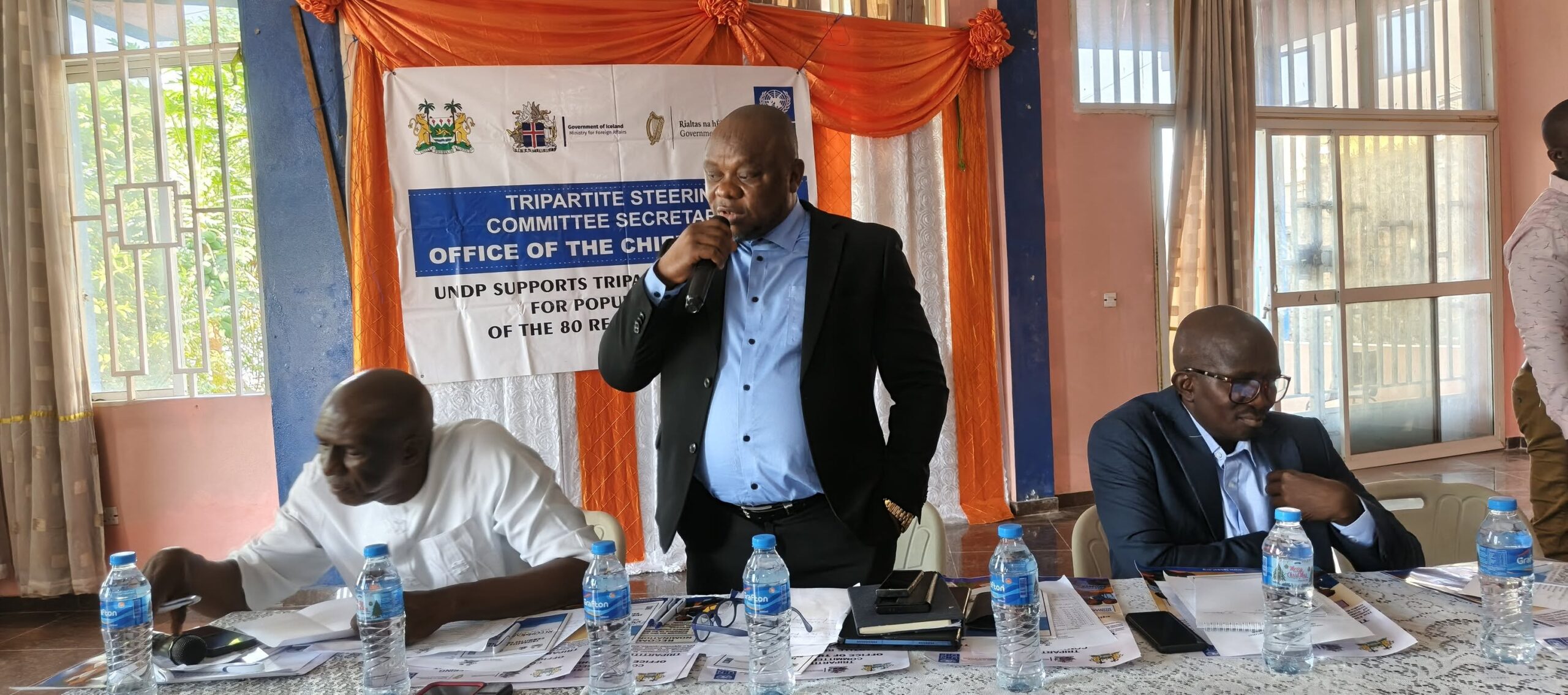
Deputy Minister of Information and Civic Education chaired the session at Tower Hill, welcoming the audience and political parties who attended the event. Bockarie Abdel-Aziz Bawoh said it was important that Sierra Leoneans learned about the recommendations to be able to ask questions regarding their implementations.
The tripartite was a mechanism to build a better electoral system and institute administrative policies that would improve administration and operation in government offices dealing with elections. Sierra Leone has stood out as one of those countries that has shaped its political culture based upon the aspiration and reason of its people, installing policies where they do not exist, reviewing laws where existing ones appear weak, and transforming powers into public authority.
The tripartite is a mechanism to involve the public in electoral processes to attain ownership of elections results, strengthen national cohesion, foster peace and unity among citizens, and maintain respect for public institutions.

Charles Keis-Kobai, representing National Elections Watch, said the engagement was timely and its mode of communication in the Krio vernacular would steer participation from members. NEW was concerned about commitment of EMBs towards the implementation of the recommendations, and urged monitoring of the implementation process to expedite action.
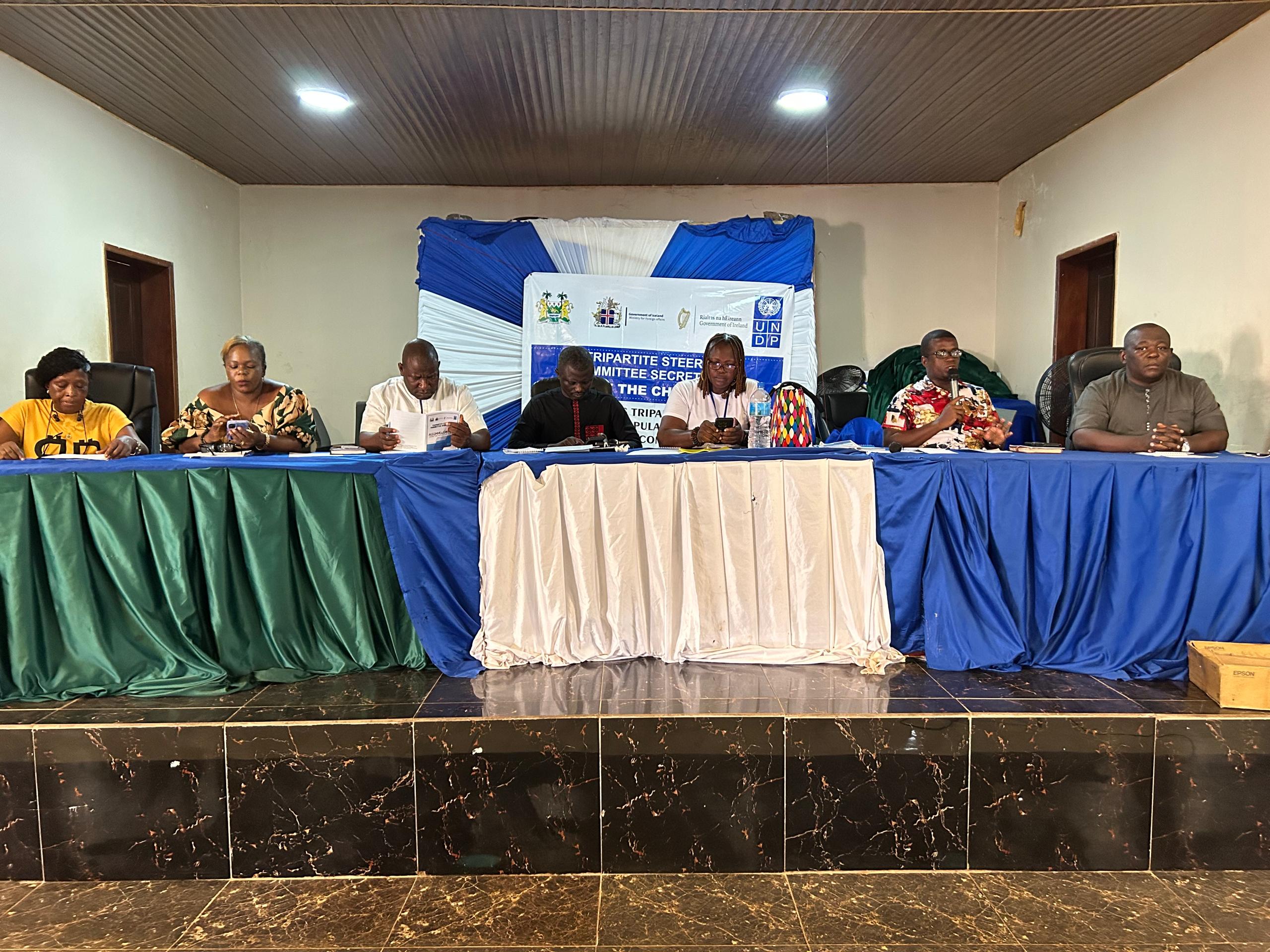
The session at Western Rural district council hall was also well attended. Honourable Abubakar Fofana who made a statement emphasized the need for collaboration and participation in the implementation process. He welcomed the involvement of the main opposition party including emerging parties in the civic engagement. He was concerned about Recommendations 20 and 78. He said parliament has announced the committees but the committee on Recommendation 20 was not among. He said they will continue to raise their voices on that matter.
The All Peoples Congress was energized to participate in activities of the tripartite, while calling for timely information sharing and prior discussion to allow participation around the tripartite.
However, the Secretariat had conducted public education sessions in Falaba, Koinadugu, Bombali, Tonkolili, Karene, and Port Loko Districts in the North and North-West Regions. The South and East covered Kono, Kailahun, Kenema, Bo, Pujehun, Moyamba and Bonthe Districts.
The events were civic empowerment to educate citizens on what the recommendations say, and learn about actions taken around them and by whom. They were not to consult on any of the recommendations. The sessions were basically to popularize the 80 tripartite recommendations.
The district-level public education activities are funded by the Government of Sierra Leone and the United Nations Development Programme (UNDP).


