
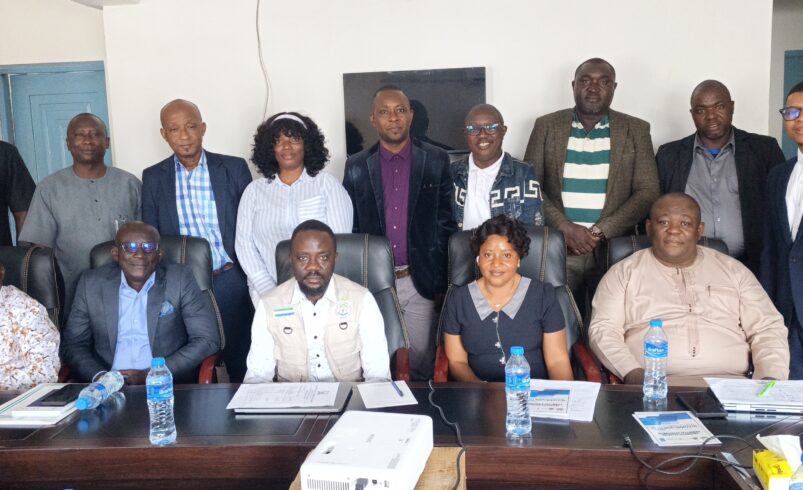
Institutions responsible for implementing recommendations of the Tripartite Committee Report have provided updates on progress during an Inter-Agency Coordination Meeting convened by the Tripartite Steering Committee Secretariat (TSCS) in Freetown.
The meeting, held on Thursday at the Tripartite Secretariat, 8 Wesley Street, brought together representatives of the Electoral Commission for Sierra Leone (ECSL), Political Parties Regulation Commission (PPRC), Office of National Security (ONS), Independent Police Complaints Board (IPCB), Independent Media Commission (IMC) and National Commission for Persons with Disability (NCPD).
The meeting was convened to discuss the status of implementation of Tripartite Recommendations relating to the functions and mandates of the participating institutions.
It also provided an opportunity for the institutions to share best practices, discuss implementation challenges and strengthen collaboration as part of efforts to align resources and advance shared objectives.
The Coordinator of the Tripartite Steering Committee Secretariat, Ngolo Katta, welcomed participants and outlined the purpose of the meeting, highlighting the importance of inter-agency coordination in supporting the implementation process.
A goodwill statement was delivered by Adikalie Sheku Kamara, Director of Conflict Resolution at the Independent Commission for Peace and National Cohesion (ICPNC). He informed the meeting of a series of engagements ICPNC has had with all Tripartite implementing institutions and political parties, including the APC. The objective was to identify the level of implementation of the TR recommendations by each of the institutions.
Alpha Amada Bah, State Counsel from the Office of the Attorney General and Minister of Justice, in his goodwill statement, provided an update on constitutional and legislative reforms linked to recommendations of the Tripartite repot, including provisions considered during the constitutional amendment process. Mr. Bah further reported that seven recommendations were accepted and six were rejected.
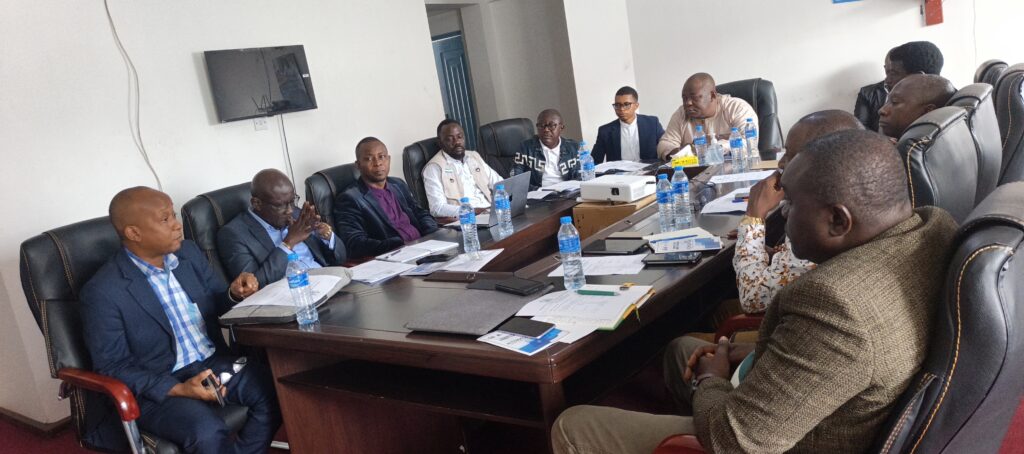
Representatives of ECSL, PPRC, ONS, IPCB, IMC and NCPD then presented updates on recommendations falling within their respective mandates, outlining progress made, ongoing activities, outstanding actions and challenges affecting implementation.
The presentations were guided by the implementation status matrix previously shared with the institutions by the TSCS to support consistent reporting and assessment of progress.
Updates from the institutions will enable the Secretariat to review and update the implementation status of the recommendations ahead of the next Tripartite Steering Committee meeting.
Discussions covered a range of issues, including electoral and political party reforms, election security preparedness, institutional and legislative reforms, media regulation, election observation and the participation of persons with disabilities in political and electoral processes.
Mohamed Turay, Assistant Executive Secretary of ECSL, provided updates on recommendations relating to the electoral process, including ongoing engagements and preparations required to advance reforms within its mandate.
Mr. Turay reported that the commission has made further progress on the implementation of Recommendation 41, which involves drafting the Code of Conduct for election observers. The proposed Code of Conduct is intended to strengthen the integrity, professionalism, impartiality and effectiveness of election observation ahead of future elections. According to Mr. Turay, ECSL has established a Working Group responsible for preparing the Code of Conduct.
Lucien H. L. Momoh, Director of Public Education and ICT at PPRC, reported on areas relating to political party regulation, including issues connected with political party registration, campaign finance and other reforms requiring legislative and institutional action. He further informed the meeting that the number of registered political parties has risen to twenty, including three new parties registered by PPRC.
Francis Langumba Keili, Chief of Staff and Chair of IESPC at ONS, provided an update on election security preparedness and coordination, highlighting the need for advance planning and collaboration among institutions involved in maintaining security throughout the electoral cycle.
Mr. Keili further noted that the IESPC Secretariat has been established and is headed by Bartholomew Membiu. The Secretariat convenes monthly meetings with stakeholders to review security risk assessments. The Secretariat also has the mandate to oversee security procedures for all elections, including Paramount Chieftaincy and other local elections.
Participants were informed that preparatory assessments and capacity-building activities would form part of the process, with some election security training expected to continue through 2027.
Vandy Bawoh, Communication and Program Outreach at IPCB, reported on institutional reforms aimed at strengthening accountability and transparency. He noted that the Public Sector Reform Unit (PSRU) had conducted a Management and Functional Review (MFR), which was approved by Cabinet, with the Ministry of Finance and PSRU to support the implementation of the MFR recommendations.
Discussions also focused on Recommendation 75 and efforts to strengthen the legal framework governing the IPCB, including its mandate and powers. Mr. Bawoh also informed the meeting that further legal and institutional reforms would be required to address existing gaps and that work was continuing towards the development of the necessary legislation.
Khalil Kallon, Executive Secretary of IMC, provided updates on reforms relating to IMC’s mandate, including Recommendation 76 and proposals for strengthening its legislative framework. Media monitors have been deployed across districts, while state-of-the-art monitoring equipment has been installed at the commission’s office. Funding for the purchase of the equipment was provided by the European Union through International IDEA. The commission is also exploring additional support to expand its monitoring capacity across the country.
With the installation of the new equipment, the commission has been enabled to monitor hate speech and potentially harmful media content before, during and after electoral periods.
Brima A. Sheriff, Chairman and Commissioner of NCPD, provided an update on efforts to strengthen the inclusion and political participation of persons with disabilities.
The meeting heard that work on reviewing disability legislation was progressing and that advocacy and technical engagement remained central to ensuring that disability inclusion is reflected in electoral and governance reforms.
Mr. Sheriff further stated that NCPD has also provided technical support to the All Political Parties Disability Association and is pursuing further engagement with ECSL and PPRC on measures aimed at strengthening the participation of persons with disabilities in political and electoral processes.
He noted that plans include continued dialogue with political parties and the development of a disability manifesto, with technical input being sought from partners before validation.
In general, participants acknowledged that progress has been made across several recommendations but noted that some reforms require extensive legal, administrative and institutional processes before they can be fully implemented.
The Coordinator of TSCS emphasised the importance of maintaining effective communication among implementing institutions and keeping Sierra Leoneans and other stakeholders informed about progress on the implementation of the Tripartite Recommendations.
He further noted that the Inter-Agency Meeting forms part of the TSCS’s ongoing coordination and monitoring efforts to facilitate implementation, identify challenges and maintain updated information on the status of the implementation of the recommendations.
Information provided by the participating institutions will be incorporated into the implementation status matrix and will help inform updates to the next Tripartite Steering Committee meeting.


