
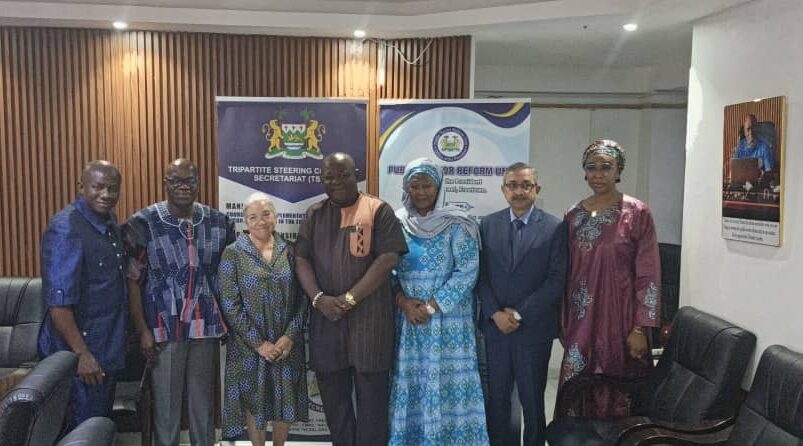
The Tripartite Steering Committee Secretariat (TSCS) on Wednesday hosted a high-level consultative meeting with a joint delegation of International Moral Guarantors undertaking a follow-up mission to assess progress in the implementation of the Agreement of National Unity and the recommendations of the Tripartite Committee Report.
The meeting started with Rev. Shoddankah Johnson, Chairman of Independent Commission for Peace and National Cohesion (NCPNC), formally introducing the delegation and called the session to order.
The delegation is in Sierra Leone from 13 to 17 April 2026, led by H.E. Fatoumata Jallow-Tambajang former Vice President of the Gambia, accompanied by Madam Barrie Freeman, Deputy Special Representative of the United Nation Secretary General (DSRSG), Mr. Tannaya Lal – Deputy Secretary General of the Commonwealth.
Also present in the delegation were Madam Hawa Sally Samai, Executive Secretary ICPNC, and other technical representatives from partner institutions including United Nations Resident Coordinator’s Office (UN RCO), ECOWAS, United Nations Office for West Africa and the Sahel (UNOWAS), Members of the Local Moral Guarantor -Independent Commission for Peace and National Cohesion (ICPNC), all of whom support the implementation process.
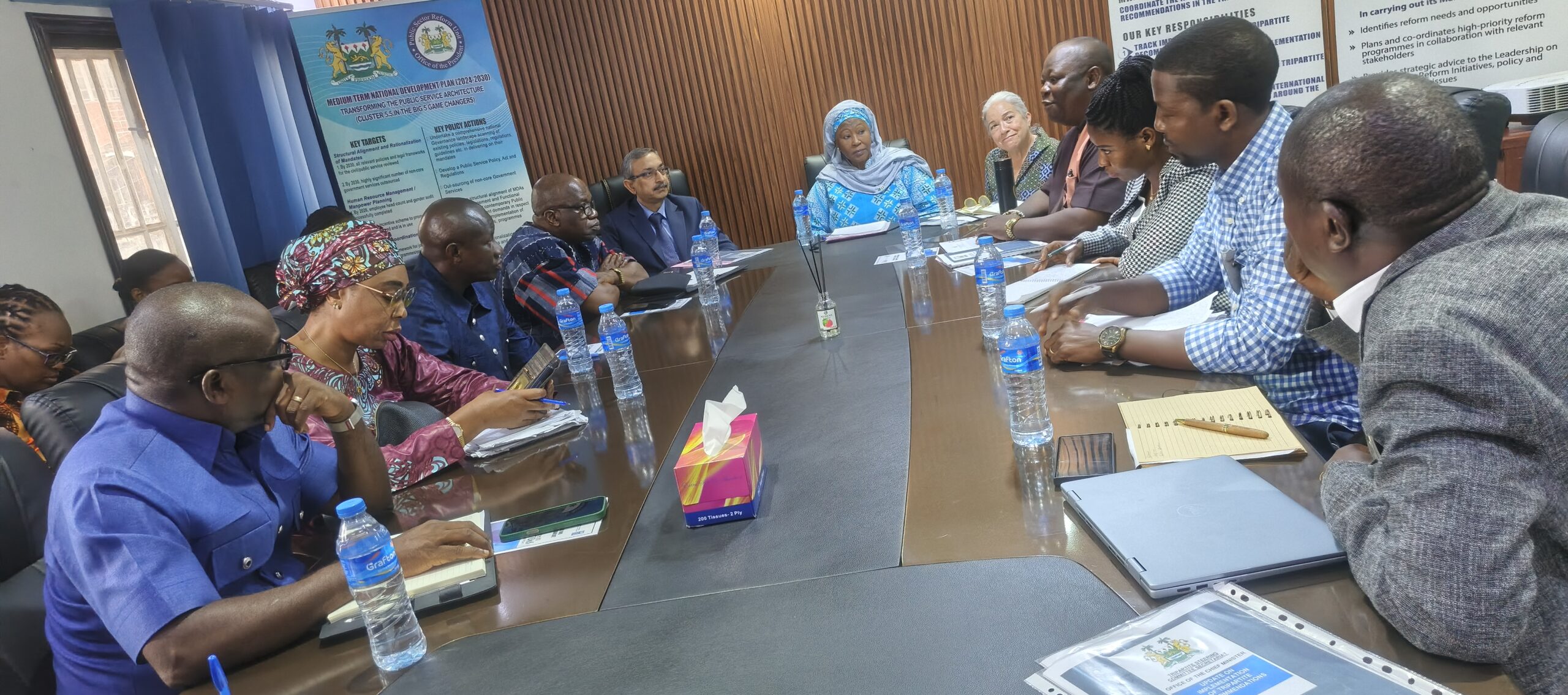
Speaking during the engagement, H.E. Jallow-Tambajang said the mission was intended to evaluate progress made, identify challenges, and assess operational gaps affecting implementation and the overall work of the Secretariat.
She said the delegation was particularly interested in examining the Secretariat’s institutional and technical capacity, the level of national and international financial support available to the institution, implementation bottlenecks and strategies to accelerate progress, as well as the composition, meeting frequency, and operational records of the Tripartite Steering Committee.
H.E. Jallow-Tambajang stressed that inclusivity and transparency remain essential to the credibility of the implementation process and encouraged the Secretariat to sustain regular public engagement and communication to keep citizens informed of progress.
She further reaffirmed the commitment of the International Moral Guarantors to supporting the successful completion of the implementation process.
Responding on behalf of the Secretariat, TSCS Coordinator Thomas Ngolo Katta welcomed the delegation and described the visit as timely and significant, reaffirming the Secretariat’s commitment to facilitating implementation of the recommendations with integrity, equity, and inclusivity.
Mr. Katta noted that the Secretariat was established by the Steering Committee to coordinate and facilitate the implementation of the Tripartite Recommendations and also enhance good optics for the citizens of Sierra Leone. The Steering Committee has set up a subcommittee to evaluate the work of the secretariat, said Mr. Katta.
He said the Secretariat continues to work closely with state and non-state actors to coordinate implementation efforts, provide technical support to Electoral Management Bodies, and strengthen public awareness of the reform agenda.
According to Mr. Katta, the Secretariat has developed a comprehensive implementation tracking matrix to monitor progress across all recommendations and has launched its official website to improve public access to implementation updates.
He added that the Secretariat convenes monthly inter-agency meetings involving Electoral Management Bodies, and implementing institutions to review progress and continues nationwide radio and television outreach to enhance public awareness.
Mr. Katta also highlighted support received from the Government of Sierra Leone, the United Nations Development Programme, and the European Union through International IDEA, noting that their contributions have significantly strengthened the Secretariat’s operational capacity and public outreach efforts.
He further referenced major milestones achieved by the Secretariat, including regional consultations on Recommendation 78, district-level public education and civic engagement across all 16 districts, production of public awareness IEC materials and jingles in various local languages, and progress on constitutional and electoral law reform initiatives under taken by the office of the Attorney General and Minister of Justice.
“Electoral reforms are comprehensive, detailed, and not ad hoc processes essential to improving the credibility and integrity of democratic systems, rather than spontaneous acts. To achieve lasting democratic impact, these reforms require careful long-term technical support, stakeholder engagement, and deliberate planning.” Mr. Katta stated.
The meeting concluded with the Coordinator reaffirming the Secretariat’s determination to work collaboratively with all stakeholders to ensure the full implementation of the Tripartite Recommendations and expressing appreciation to government partners, development partners and national institutions for their continued support.


