
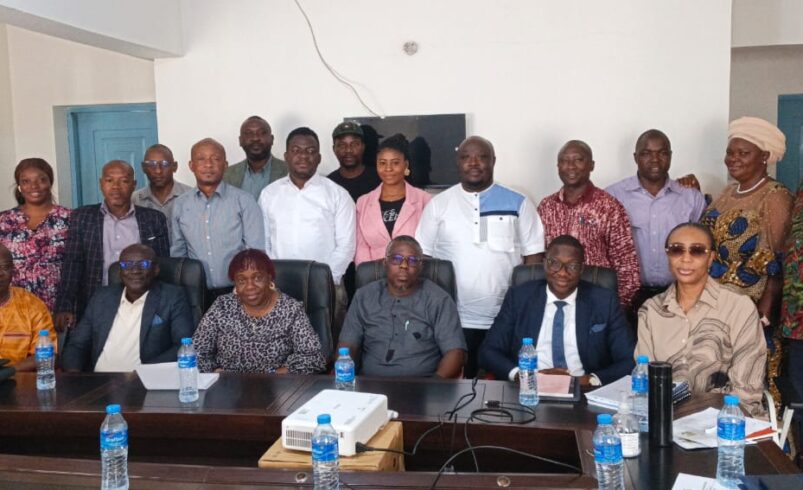
Senior government officials and electoral stakeholders in Sierra Leone have reaffirmed their commitment to advancing electoral reforms ahead of the 2028 elections, following a high-level inter-agency meeting in Freetown.
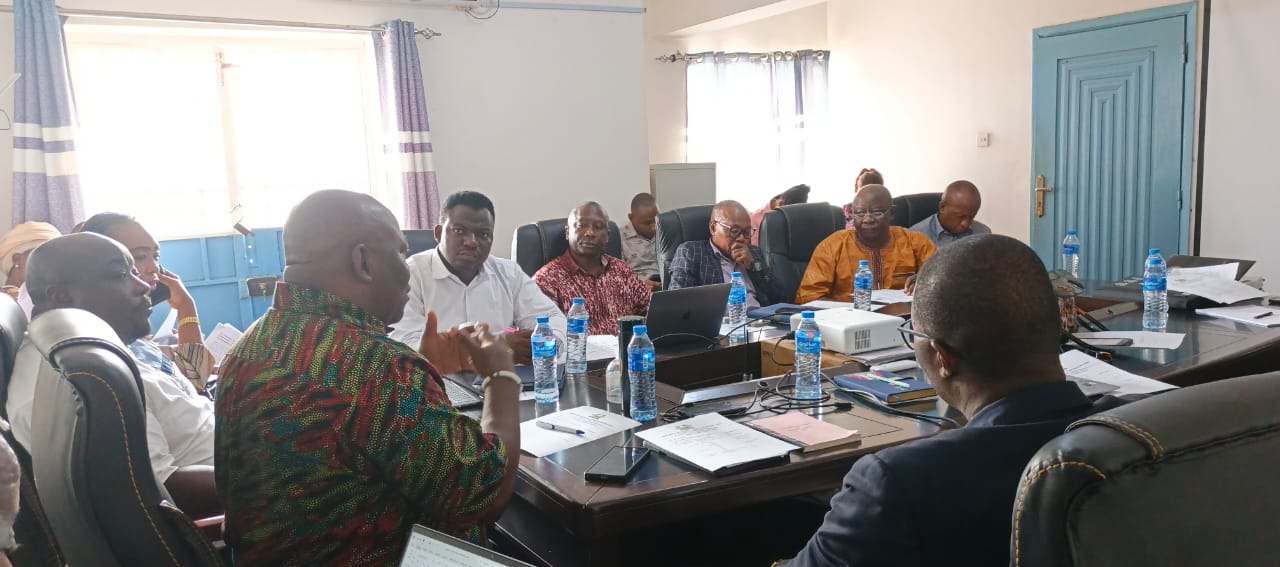
The meeting, convened by the Tripartite Steering Committee Secretariat (TSCS), brought together key institutions responsible for implementing the country’s reform agenda, including the Office of the Attorney-General and Ministry of Justice, the Independent Commission for Peace and National Cohesion (ICPNC), the Public Sector Reform Unit (PSRU), the Electoral Commission for Sierra Leone (ECSL), the Political Parties Regulation Commission (PPRC), the Office of National Security (ONS), the Independent Media Commission (IMC) and the National Civil Registration Authority (NCRA). The Sierra Leone Broadcasting Corporation (SLBC), the Independent Police Complaints Board (IPCB) and the Human Rights Commission of Sierra Leone (HRCSL) were absent due to prior engagements.
Chairing the meeting, TSCS Coordinator Thomas Ngolo Katta described it as a critical platform to assess progress on the implementation of 80 reform recommendations and to strengthen coordination among institutions. He said the process is “Sierra Leonean-generated, Sierra Leonean-driven and Sierra Leonean-owned”, aimed at strengthening governance, promoting national cohesion and shaping the country’s democratic culture ahead of the 2028 elections.
He noted that progress had been made through Management and Functional Reviews across institutions, including the ECSL, PPRC, IMC, SLBC and IPCB, adding that continued institutional capacity-building and monitoring would be key to sustaining momentum. He also highlighted the recent visit of international moral guarantors as important in reinforcing transparency, inclusivity and accountability within the reform process.
The Executive Secretary of the ICPNC, Hawa Sally Samai, said an eight-day mission by the moral guarantors had strengthened implementation of the Agreement of National Unity but warned of misinformation and declining public trust. She called for improved public communication and wider use of media platforms to raise awareness. She added that engagements between the government and the All People’s Congress had resulted in eight agreed action points, with 31 December 2026 set as a key target for implementation.
Mr. Albert R.C.E. Williams, Chief of program PSRU, said reforms aimed at improving public service delivery is one of the five big game changers of government of Sierra Leone development plan. It therefore relates with the tripartite recommendations 6, 10, 21, 76, and 77 on completed Management and Functional Reviews across several institutions and recommendations submitted to His excellency the President and others to the Chief Minister, Chairman of the Tripartite Steering Committee.
Representative from the Attorney-General’s Office, Thomas Joe Freeman Esq, senior state councilor said draft legislations linked to the reforms, including provisions in the Constitutional Amendment Bill 2025, had been prepared and submitted to Parliament, waiting parliamentary debate and enactment. The minister has made frantic effort to capacitate the law drafting division to fact-rack the process.
The Electoral Commission for Sierra Leone reported progress across 57 recommendations, and was identified as one of the leading institutions in the implementation. Mohamed Turay, Assistant Executive Secretary 1 at the ECSL, said the Commission has established an ad hoc committee to fast-track the implementation of the 57 recommendations. He noted that some, including recommendations 5, 15 and 34, remain challenging, and said the Commission would continue working with the TSCS to provide evidence-based updates as internal restructuring continues.
Providing an update on media reforms, Steven B. Mansaray of the IMC said Recommendation 76 focuses on the appointment of the chairperson, strengthening the Commission’s mandate, including enforcement powers under the IMC Act 2020, regulation of social media and training in collaboration with the ECSL. He said consultations supported by International IDEA with funding from EU had been completed and draft proposals submitted, but their current status remains unclear. He added that implementation of the IMC’s Functional Management Review is pending further direction.
The Deputy Director General of the NCRA, Brima V. Kamara, said progress is being made on recommendations 15 and 22, including discussions with the Attorney-General’s Office on legal reforms related to the issuing of the national identity cards. He said the Authority is decentralising registration services and deploying mobile units across all 16 district headquarters, mobile units for chiefdoms and ward levels but faces challenges including outdated equipment, the need for a disaster recovery data centre and funding constraints. He added that coordination between the NCRA and ECSL will be essential to harmonise national identification systems for electoral use.
Lucien H.L. Momoh, the Director of Training and External Relations of PPRC said implementation efforts are ongoing, focusing on recommendations related to political party regulation, including audited accounts, deregistration criteria and campaign financing. He said draft regulation on political campaign financing have been prepared and submitted to the Attorney-General’s Office, which has been design into a constitutional instrument to be laid before parliament. It is worth noting resistance from several political parties on deregistration provisions.
Francis Languba Kellie, the chief of staff of ONS outlined progress in the security sector, including integrated election security planning institutionalized as sub directorate for nationwide election security coordination. He said a multi-sectoral framework has been established across all 16 districts, supported by training programmes and international partners. Several frame works have been developed including training manuals, election security strategy, national elections treat assessment, district risk mapping guidelines, election security communication strategy etc He also indicated that they just completed a one-week training on all tripartite processes of their staff from their provincial, districts and chiefdoms security committee. He added that while a post-election report for the 2023 elections has been submitted, challenges remain, including funding, logistics and operational capacity.
Participants said the 31 December 2026 deadline should be seen as a milestone rather than an endpoint, while identifying communication gaps as a major challenge contributing to public misunderstanding and mistrust. They called for stronger media engagement, regular updates and closer collaboration with civil society and development partners.
The meeting concluded with a renewed commitment to strengthen inter-agency collaboration, accelerate implementation and ensure accountability, with stakeholders emphasising that sustained coordination and transparency will be essential to delivering credible, inclusive and peaceful elections in 2028.


