

The Tripartite Steering Committee Secretariat (TSCS) has held a consultative meeting with the Electoral Commission for Sierra Leone (ECSL) on Friday 13 February 2026, as part of ongoing efforts to monitor and support the implementation of the Tripartite Recommendations relating to key national institutions.
The meeting was chaired by the Commissioner East, Mr. Alex PL Saffa in the absence of the Chairman and Chief Electoral Commissioner designate, Mr. Edmond Sylvester Alpha, who was unavoidable absent at the beginning of the meeting.
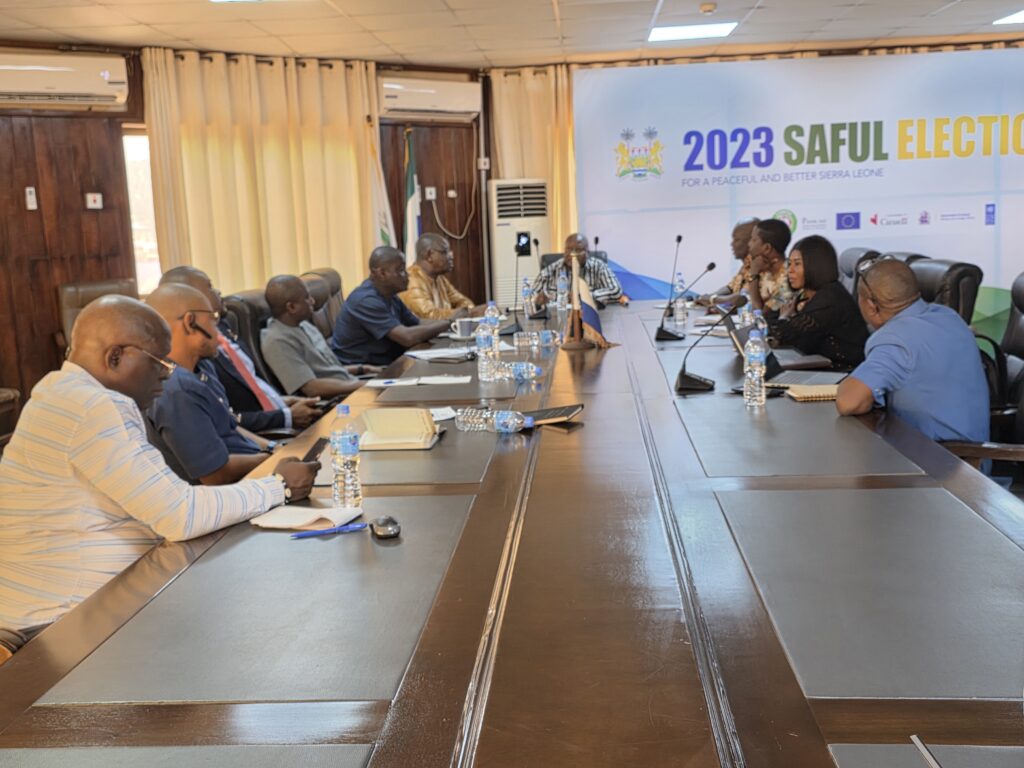
Opening the discussions, the Coordinator of the Tripartite Secretariat, Mr. Thomas Ngolo Katta, said the engagement was aimed at gaining an in-depth understanding of four key thematic areas: the Commission’s assessment, views and response to the Constitutional Amendment Bill 2025; the development of policies and regulations highlighted in the Tripartite Recommendations; the level of implementation of recommendations related to ECSL; and the timelines for recommendations categorised as “Not Started” and “Ongoing”.
Mr. Katta stated that the Secretariat continues to carefully review aspects of the Constitutional Amendment Bill 2025 in relation to the Commission’s constitutional mandate and operational responsibilities. He explained that the discussions were intended to clarify technical considerations and support the effective implementation of the Tripartite Report, ensuring that the recommended reforms contribute to meaningful institutional development.
Providing an update on the status of the implementation process, the Executive Secretary of ECSL, Mr. William A. Davies, outlined the current level of implementation of the recommendations and highlighted challenges faced in executing certain provisions. He cited issues such as independent monitoring of voter registration, the proposed use of National Identity cards instead of the ECSL election voter Identity cards, and the sharing of annual audited accounts with Political Parties. He said some of these recommendations could potentially undermine the constitutional powers and full functions of the Electoral Commission.
Mr. Davies also informed the meeting that the Commission has developed three policies and three regulations in line with the Tripartite Recommendations. These include a Consultation Policy, a Document Sharing Policy and the ad hoc Policy to guide procedural operations, as well as regulations on Monitoring and Evaluation (M&E), Risk Management and the Strategic Plan, all of which are set for implementation. He said Recommendations 7 and 12 are already fully operational, while Recommendations 4, 5, 8, 13, 15, 41, 55, 62 and 63 may present implementation challenges due to concerns about institutional authority.
He further addressed issues relating to the proposed fixed date for the election calendar and provisions concerning the appointment and qualifications of the Electoral Commissioner and Regional Commissioners under the new constitutional framework.
The Director of Legal Affairs, Mr. Fah-Bundeh, expressed concern about what he described as a possible reduction in presidential powers, particularly regarding the establishment of a Search and Nomination committee for the appointment of the Electoral Commissioner and the proposal for the Chief Justice to validate electoral results instead of the Chief Returning Officer. He said such changes could diminish the authority of the Chief Electoral Commissioner.
In his closing remarks, Mr. Alex PL Saffa, Commissioner East and Chair of the meeting, said that the Commission’s mandate remains focused on operational effectiveness and service delivery to the people of Sierra Leone.
Both institutions underscored the need to maintain momentum in implementing the Tripartite Recommendations, with particular attention to strengthening the Commission’s mandate and related institutions to ensure prompt and credible electoral service delivery.
The Chairman and Chief Electoral Commissioner designate who later joined the meeting thanked the Secretariat and assured continuous commitment to the implementation of the Tripartite Recommendations.


